Wednesday, December 16, 2020

Deanie

In December 2019 I lost my best friend, my sister to breast cancer.  

Words cannot express how painful and hard it has been losing you. I still struggle with the knowledge that you are no longer a hug or phone call away.

There is not a day that goes by that I don’t think of you. They say time heals all wounds... but this is just too deep. 

You fought so hard for another day and I draw upon your strength, your fierce determination. 

Let me say that being your sister is the greatest blessing life has offered me. There is no one I would’ve rather grown up and shared this life with. 

Our lives haven't always been perfect we have had some hard spots in life but I can't remember a single one that we faced alone.

I never thanked you enough. For being there, for listening, for your unconditional love. Thank you for letting me vent. Thank you for making me an aunt and sharing your children with me. Thank you for being you. 

I miss our late night conversations. Your advice, silly Facebook comments... I miss you asking, “Where are you now?” I miss you sharing pics of your grandchildren, grand puppies... your family is/was your greatest pride. 

I am proud we are a soul family. I know that we will have more life experiences. I just was hoping for more time in this one. I know you, mom, Ray are waiting for me.... on the old heated fishing dock. I can’t wait. 

I will live each day in honor and remembrance of you.


Cast Iron Grave Covers

Just whisper my name
in your heart
and I will be there.”


Following the Civil War when people were looking for inexpensive-yet-durable burial markers for their relatives, a civil engineer who tinkered as an inventor got a patent for his grave coverings, which included building supports below-ground.

Joseph R. Abrams of Greenville, Alabama patented the cover design in 1873, suggesting that the mound of earth on underground supports should be covered in cockleshells to prevent erosion and a frame of "any suitable material, separate for convenience in handling and transportation, and may be fitted together like the plates of a stove."


When put into practice, that suitable material turned out to be cast-iron. Soon, the covers, which look something like intricate roasting-pan tops or large oblong gelatin molds, dotted cemeteries across the country. They were made from pouring molten iron into decorative molds and cooling them. Although the inventor thought they would be durable, and they proved successful in preventing erosion and collapse, people soon found they rusted and turned brittle, causing the name plates and decorations to break. They could also break in freezing weather.


In 1875, Egbert Sipes of Pennsylvania for filed a patent for an improved design, stating: "This invention has relation to cast-iron grave-covers; and it consists in making the cover open at the sides, with four supporting legs of sufficient length to elevate the cover to the height of the mound of the grave. In this construction the grave-cover, being open at the sides and ends, cannot become broken by the effect of freezing, an accident which is apt to occur in cold climates."


Today, relatively few of the cast-iron covers survive.  


Tuesday, December 15, 2020

Oakwood Cemetery Jefferson Texas


The next few days I will be posting pictures and stories about my visit to Oakwood Cemetery in Jefferson Texas.  

Oakwood cemetery opened around 1846. Earlier one of Jefferson's Founders, Alan Urquhart, had donated a cemetery site that was unusable for burials. Mr. Urquhart then donated this present site which was much larger and contained more natural beauty than the previous site.

Oakwood Cemetery is culturally and historically unique in that it contains above ground burial sites similar to those found in South Louisiana, while also containing elaborately ornamental monuments that would have been found in the original thirteen colonies. There are many locally famous and infamous people buried at Historic Oakwood Cemetery including Diamond Bessie, John Vines, Outlaws Jesse Robinson & Bill Rose, Kate Woods, Jessie Allen Wise and Captain Joseph H. Platt.

John Vines served in the Civil War for the Confederacy as a Farrier. After the war he was the Sheriff of Marion County and was famous for bringing back Diamond Bessie's accused murderer, Abe Rothschild, back from Ohio to stand trial.

If you find a grave without a stone or inscription and consist of just two short poles linked by a chain, you have found the final resting place of Jesse Robinson and Bill Rose. Longtime outlaws and a real pain the neck to the people of Jefferson, they killed each other in a gunfight. Legend has it that the townsfolk buried them together in a single grave, chained together for eternity.

Kate Woods, a German immigrant who arrived in Jefferson in 1877, purchased and ran the Excelsior Hotel.

Also buried here is Captain Joseph H. Pratt, who served in the Confederacy. During the Civil War he led the 10th Texas Field Battery during the Civil War. Other Confederate soldiers are buried here too, along with soldiers from the United States of America who served and died in the Jefferson area during reconstruction.

When visiting Historic Oakwood Cemetery, or any other cemetery, please keep in mind that this is the final resting place for real people. Buried in these cemeteries are Fathers and Mothers, Sons and Daughters and Wives and Husbands. Always keep in mind that others may be paying respects to their loved ones, so keep your voices low. Please never walk or stand on anyone's grave and never sit or lean on someone's memorial. Also keep in mind that some of these gravestones are very old and are very fragile.

Leave all items - toys, coins, bottles of alcohol, stones on the grave or headstone. These mementos have significance.

For thousands of years, many people memorialized their loved ones by burying them and placing stones on top of their graves. Known as cairns, these stones were stacked on top of the graves to mark the burial site and to protect them from animals.

Today, leaving a stone, pebbles, painted stones on a grave is a way of continuing this tradition of commemorating loved ones. The number of stones placed on top of a headstone equates to the number of visitors.

It is a Jewish custom to place a stone or pebble on a headstone order to keep the soul of the deceased where it belongs.

A coin left on a headstone lets the deceased soldier's family know that somebody stopped by to pay their respects. If you leave a penny, it means you visited. A nickel means that you and the deceased soldier trained at boot camp together. If you served with the soldier, you leave a dime. A quarter is very significant because it means that you were there when that soldier was killed.

Please be respectful.

Jefferson Texas

“To play catch on an evening, to smell the river, to hear the train pass. These little towns were once the bold ramparts meant to shelter just such peace.”
― Marilynne Robinson, Gilead

December 1st I traveled to my friend’s home in Jefferson Texas.

In the early 1840’s Jefferson was founded by by Allen Urquhart and Daniel Alley. It was named after Thomas Jefferson.

Late 1834 or early 1844 the first steamboat, the Llama, reached Jefferson.

1846 a post office was established.

1848 the town was incorporated

1867 Jefferson became the first town in Texas to use natural gas for artificial lighting purposes,

1868 ice was first manufactured on a commercial scale there in 1868.

1870 Jefferson, with a population of 4,180, was the sixth largest city in Texas

Jefferson Texas was known for its places of historic interest, including numerous mid-nineteenth-century homes, churches, and other structures. In 1971 a roughly forty-seven-block area containing fifty-six historic structures was listed in the National Register of Historic Places. In addition, some ten other buildings have been accorded National Register status, including the antebellum Excelsior Hotel and Planters Bank and Warehouse. Every year Jefferson sponsors a three-day spring historic pilgrimage to view these sites. Since 1955 the festivities have also included a reenactment of the Diamond Bessie Murder Trail.


Monday, December 14, 2020

The Person I Was

“Moderation. Small helpings. Sample a little bit of everything. These are the secrets of happiness and good health.” ~ Julia Child


November 29th -  I went shopping.  Which can be a bad thing for sales clerks who try to help me.  When I look in the mirror I see the person I was - 50 pounds ago.  Then I see the flaws loosing weight creates.  That is why I wear jeans that are to big.  Once a size 18 always a size 18 and it is easier to just run in a store, grab a pair of jeans, pay for them and run out.  

Only I am not a size 18.  I went shopping.  I went to 5 stores in 4 hours but I found bootcut jeans in my size,  no one was injured or insulted.   I kept my belts just in case.

I am wanting to purchase an elliptical but I also want to continue to travel...  On that note


Thank you Susan for the song.

Wilson's Creek National Battlefield

It was not well to drive men into final corners; at those moments they could all develop teeth and claws.”
― Stephen Crane  

November 28th I visited Wilson Creek Battlefield

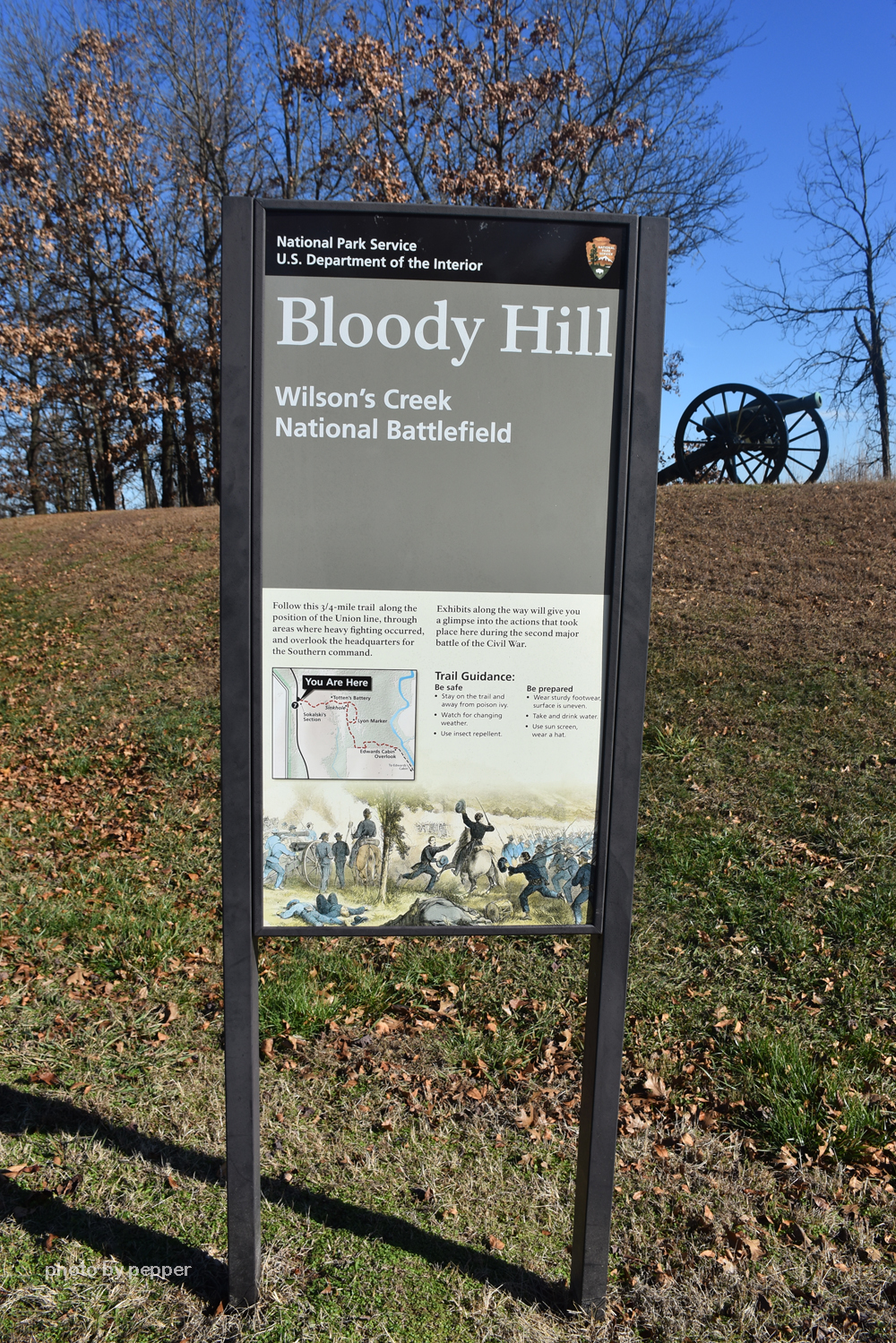
Wilson Creek was fought on August 10, 1861, it  was a pivotal battle in Missouri and the second major battle of the Civil War. When the smoke cleared, more than 2,500 Union and Confederate soldiers were killed, wounded or missing in five hours of intense fighting.    It is the site of the death of Nathaniel Lyon, the first Union general killed in action.  Wilson Creek NB commemorates and interprets the battle within the context of the war in the Trans-Mississippi West.  A five-mile self-guided tour road allows visitors to explore the battlefield at their own pace. Walking trails lead to various battle sites, including Bloody Hill, the Historic John Ray House, and the Edwards Cabin.


Monday, November 30, 2020

Everything Will Be Alright

 Her name was hope her hair was blacker than the sky

She had a smile that made the devil cry

She held is hands, looked him in the eye

She said "believe, believe and everything will be fine."

Everything will be all right

Today's the day, you can bet on that

I heard her close the door, she ain't looking back

A twist of fate or a stroke of luck

Well, the answer's over there beyond the wishing well

Everything will be all right

Take the fire in your hands

And place it at her feet

Walk upon the mountain

Then you'll sail across the sea

Her eyes are taken from the stars above,

Her voice is five hearts breaking

Her voice is five hearts breaking

Her voice is five hearts breaking

The skies are fire and he's waiting to die

And his heart's as empty as a dead man's eyes

She held his hands, looked him in the eye

She said "believe, believe and everything will be fine."


Everything will be all right

Everything will be all right

Everything will be all right 


“Five Hearts Breaking” from the Alejandro Escovedo lp “Gravity”    1992